
The one-sentence rule
If your garage shares a wall or ceiling with living space, or you spend real time working in it, insulation earns its keep; if it's a detached box that just holds cars and bins, you're probably paying for a number you'll never notice.
That's the short version. Now here's the part that actually settles the argument, because both sides are usually a little right.
What R-value is actually measuring
R-value measures resistance to heat moving through the door panel itself — nothing more. It doesn't measure how well the door seals against the frame, how old the weatherstripping is, or how much air leaks around the bottom. A door with a high R-value but a gapped, cracked bottom seal can still let in more cold air than a lower R-value door that fits tight. This matters a lot in this area, where icy winters and heavy rain mean gaps don't just cost you heat — they let in water and, eventually, pests.
Who genuinely benefits
- Homes where the garage is under or beside a bedroom, bonus room, or laundry area. Heat and cold move through that shared wall or ceiling, and an insulated door reduces how hard your HVAC has to work to compensate.
- Anyone using the garage as a workshop, home gym, or second living space. Insulation keeps the temperature swings bearable, especially in a region with humid summers and icy winters where the garage can otherwise feel like an oven in July and a freezer in January.
- Owners of older homes with single-layer steel doors. A lot of the housing stock here is a mix of old and new, and older doors were often built with no insulation at all. Swapping to even a basic insulated model is a noticeable upgrade, not a marginal one.
- Anyone storing items sensitive to temperature or humidity. Paint, electronics, wine, musical instruments — these don't do well with wide swings, and insulation smooths that out.
Who's paying for nothing
- Detached garages with no shared walls to the house. There's no heated living space on the other side for the insulation to protect, so the R-value number is mostly cosmetic.
- Garages used purely for parking and basic storage, where nobody spends time and nothing inside cares about temperature.
- Homes where the garage is already well-sealed and the attached wall is properly insulated. In that case the door is a smaller piece of a bigger envelope, and money is better spent elsewhere.
The part both sides usually miss
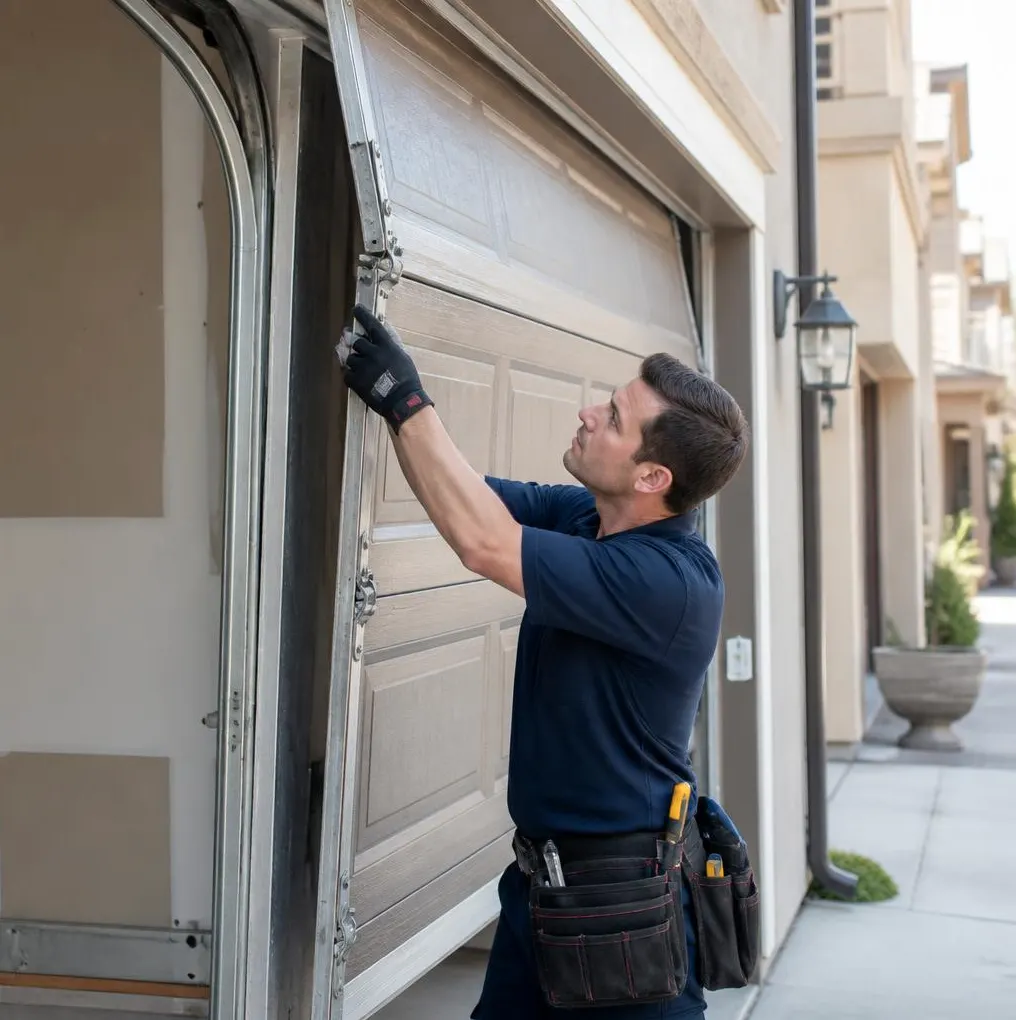
Seals matter more than the R-value sticker. A new insulated door with worn bottom weatherstripping, gapped side seals, or a bent track will still leak air and water. Before anyone spends extra on a higher R-value door, it's worth checking:
- Is the bottom seal cracked, flattened, or pulling away from the door?
- Can you see daylight around the edges when the door is closed?
- Does the door close flush against the frame, or does it rock or gap on one side?
If those seals are bad, fixing them often closes most of the comfort gap for a fraction of the cost of a full insulated door replacement. If the seals are fine and the real issue is the panel itself, that's when insulation makes sense.
The trade-off to be honest about
Insulated doors cost more upfront — national ranges for materials alone typically run higher than non-insulated steel doors, before installation. They're also heavier, which means the opener and springs need to be rated for that weight. That's not a reason to avoid them if your situation calls for it, but it's a real cost difference that should be weighed against how much time is actually spent in or next to that garage.
When to call Gaithersburg Garage Door
If you're not sure whether your current door is actually insulated, whether your seals are the real problem, or whether your opener and springs could handle a heavier insulated door, that's worth a second set of eyes before anyone spends money. We handle both Garage Door Installation for homeowners upgrading to an insulated model and Garage Door Maintenance for those who just need seals, weatherstripping, and hardware checked before winter sets in.
If you're weighing this decision for a home in Gaithersburg, Rockville, Germantown, or anywhere nearby, call Gaithersburg Garage Door for a straight answer about what your specific garage actually needs — not just what the door tag says.